Grid-connected solar
On-grid solar
An on-grid system works with the electricity connection. It can reduce what you import while the sun is up. It does not, by itself, keep the building powered when the grid fails.
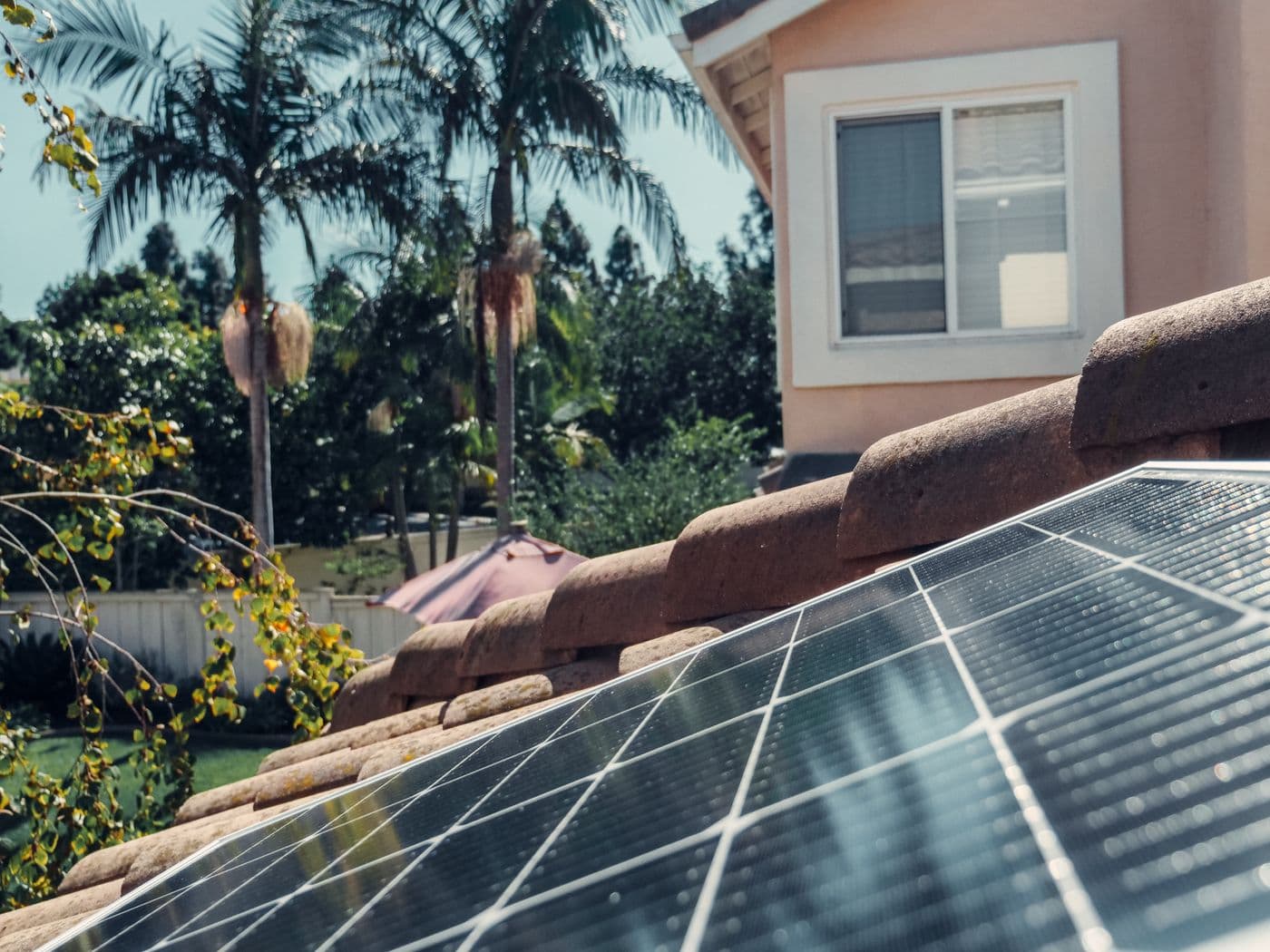
How grid-connected solar works
Solar panels produce direct current. A grid-tied inverter converts that to alternating current and synchronises it with the grid's voltage and frequency. The building uses that power, and draws the rest from the grid when the panels are not enough.
If the panels produce more than the building is using, the extra may be exported only where the distribution company allows it. Export is a permission and a metering arrangement. It is not automatic.
Main equipment
Solar panels
The array is sized and placed for the roof and the electrical design.
Grid-tied inverter
It converts DC to AC and stays synchronised with the grid. It is not a hybrid inverter and it does not charge a battery.
DCDB and ACDB
The DC distribution board and the AC distribution board hold isolation and protection for their sides of the system.
Protection devices
Fuses, breakers, and surge protection are chosen for the design. This page does not list ratings.
Earthing
Array, inverter, and AC earthing are part of the electrical design for the site.
Power cuts and anti-islanding
A conventional grid-tied inverter shuts down during a grid outage. Anti-islanding protection stops it from feeding a line that line workers may believe is dead. A standard on-grid system does not provide backup during power cuts. If backup matters, read the hybrid page. Backup there is still limited by the battery and the load.
Net metering, import, and export
Net metering is the distribution company's process for measuring electricity you import and, where allowed, electricity you export. The meter, the application, and the credit rules are local. Anvi Solar explains the idea and confirms the current process for your connection during a survey.
Import is what you still buy when solar is not enough. Export is what you might send out when solar exceeds the load and the utility allows it. Neither figure is guaranteed on this website.
Advantages and limitations
Advantages
The system uses the grid as the balance. There is no battery to size for every evening load. Daytime consumption can be served from the roof when the design and the weather allow it.
Limitations
No backup in an outage. Generation follows the sun and stops with shade, soiling, or an inverter trip. Export depends on the utility. Savings are not guaranteed.
On-grid questions
Why does the inverter turn off in a power cut?
Anti-islanding protection switches off a conventional grid-tied inverter so it does not energise a dead grid. That is a safety behaviour, not a fault you should bypass.
Does on-grid solar include a battery?
No. A battery belongs to a hybrid or off-grid design.
Is net metering available on every connection?
No. It depends on the distribution company and the connection. The process is confirmed for the site. It is not assumed.
Can I change the protection settings myself?
No. Do not open covers or bypass protection. Call a qualified person.
Ask about an on-grid system
Call now, WhatsApp, or open the contact page. Say whether the building is a home or a business.
