Not connected to the grid
Off-grid solar
An off-grid system stands on its own. Panels and batteries have to cover the loads you put on it, including days with less sun. It is not the usual suggestion for a building that already has a stable grid connection.
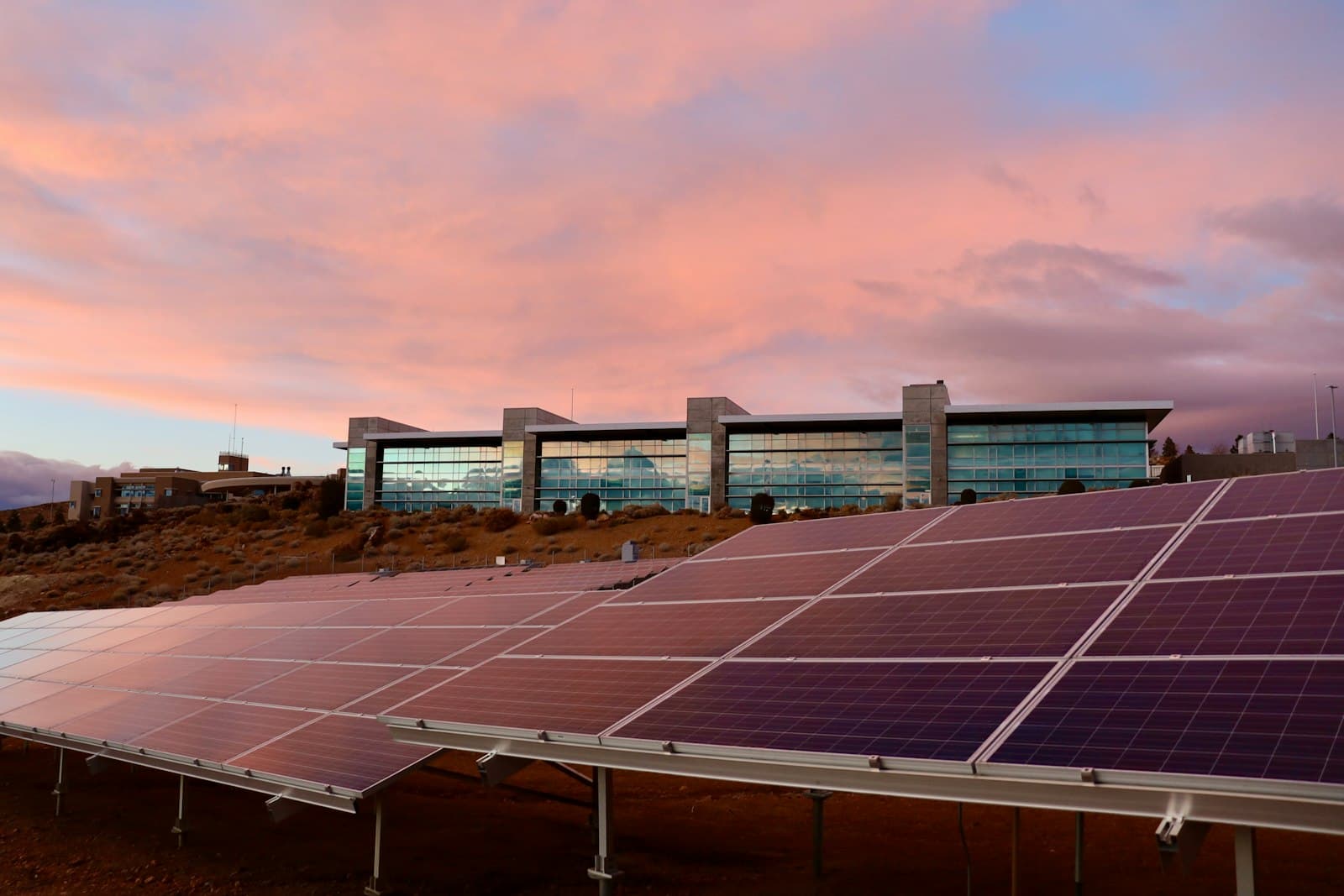
What an off-grid system is
There is no import from the distribution company and no export to it. When the battery is low and the sun is weak, the loads stop unless another source was designed in. That limit is the point of the design conversation.
Anvi Solar will not recommend a capacity from this page. Daily consumption, peak load, and the location's sunlight have to be understood first.
Equipment
Solar panels
The array has to replenish what the loads and the battery use, with a margin for poor sun. The margin is calculated for the site.
Off-grid inverter
It supplies AC from the battery and the panels. It does not synchronise with a grid, because there is no grid connection in this design.
Battery bank
The bank is the store for night use and for cloudy days. Its size is the autonomy you agree, not a catalogue default.
Charge controller
Where the inverter does not already include charging control, a charge controller regulates the charge from the panels. It is included when the design needs it.
DC and AC protection
Isolation, fusing, earthing, and cable protection are part of the design. Ratings are not published here.
Load and energy planning
Daily energy consumption
Add the watt-hours of the loads you intend to run. A guess from the number of rooms is not enough.
Peak load
The inverter and the battery must start the largest combination of equipment you will run together, not only the daily total.
Battery autonomy
Autonomy is how long the battery should carry the loads with little or no sun. More autonomy means a larger bank and a larger array to refill it.
Solar generation
Generation depends on the array, shade, season, and soiling. It is estimated for the location. It is not a fixed daily number on this page.
System limitations
Off-grid solar does not grow to match new appliances on its own. Adding a pump, a heater, or another air conditioner can overload the inverter or empty the battery. There is no grid to make up the difference. Backup planning means deciding, in advance, what is allowed to run.
Maintenance
Panels need safe cleaning. Batteries need the inspection and the environment the design called for. Connections should stay tight and dry. Do not bridge a fuse that keeps opening. That fuse is telling you the load or the fault is outside the design.
Keep a simple list of what is connected. When something new is added, ask for a check before it is treated as part of the system.
Off-grid questions
Can you suggest a kilowatt size online?
No. Capacity needs your daily consumption, your peak load, and the sunlight and shade at the location.
Will it run everything in the house?
Only what was included in the load list and only within the battery and inverter limits. New loads need a new check.
What happens on a cloudy day?
The battery covers the autonomy it was sized for. Beyond that, loads have to be reduced or another source has to be part of the design. The sun is not guaranteed.
Is off-grid a good idea if I already have a grid connection?
Usually an on-grid or hybrid system is the relevant discussion. Off-grid is for sites that need a supply that is not tied to the distribution network.
Enquire about an off-grid site
Call now, WhatsApp the location and the main loads, or open the contact page. A capacity will not be promised in the first reply.
